According to ScienceDaily, Astronomers have traced mysterious gas clouds near the Milky Way's central supermassive black hole to a massive pair of stars whose colliding winds appear to create dense clumps of material.
Context
The report, filed in our Science section, was first published by ScienceDaily on Friday, November 20.
Read the full reporting at the original outlets above. All facts and claims come from these sources and are attributed to them.
Automated brief This brief was compiled automatically by a rule-based system (no AI) from the headlines, feed teasers and page summaries that the outlets above published. Each outlet's text appears in its own attributed paragraph as a short excerpt; only public-domain U.S. government releases are quoted at greater length. Background paragraphs are excerpts from Wikipedia. Nothing else is added, and crime and allegation wording is attributed to the sources. It may contain errors — the original reports are authoritative. How we work · Corrections: theopenwiresupport@protonmail.com
According to ScienceDaily, a groundbreaking study of the 3-million-year-old Taung Child fossil suggests that several ancient human ancestors once thought to belong to the same species may actually represent different branches of our evolutionary family tree.
According to ScienceDaily, Time may be far stranger than we realize, and scientists have proposed a way to detect clocks experiencing multiple flows of time simultaneously. Using atomic clocks with dramatically enhanced sensitivity, researchers hope to reveal a never-before-observed quantum effect that could transform our understanding of time and gravity.
According to ScienceDaily, scientists at CERN have found the first evidence of an incredibly rare particle decay after more than 40 years of searching, detecting a process expected to occur just once in every 10 billion beauty particles.


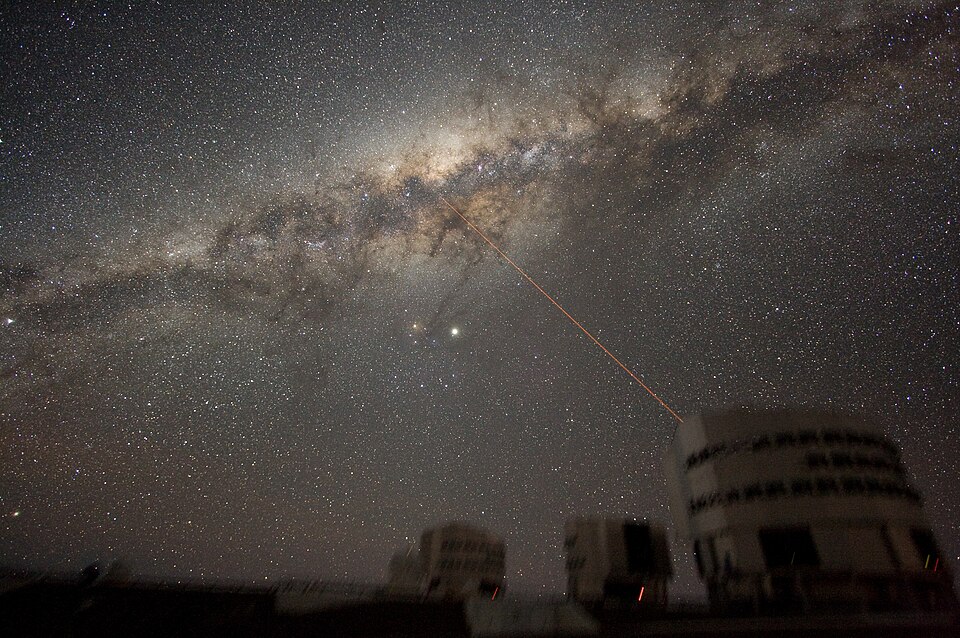 SciencePhoto: ESO/ Y. Beletsky, CC BY 4.0